
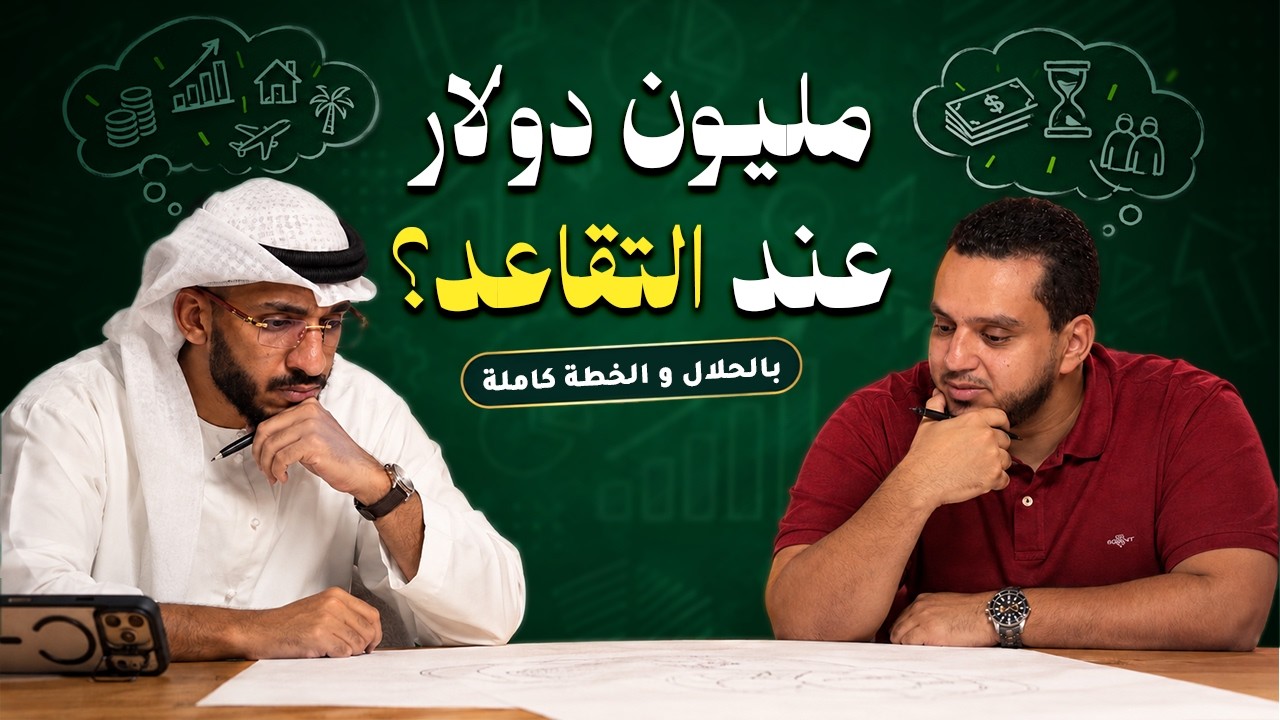
Investing Monthly Surplus With a Clear System, Not Random Tips
Why halal investing begins with what remains each month, and why a system matters more than chasing tips.
Share the details of your proposal and we will get back to you.
Disclaimer: We do not provide financial or investment advice of any kind, nor wealth or investment portfolio management services. All content on this website is for educational and awareness purposes only and does not constitute a recommendation to buy or sell any asset. Please consult a licensed adviser before making any investment decision.
Ideas and insights for clearer investing decisions.
Thoughts on markets, investing and content creation.
Why halal investing begins with what remains each month, and why a system matters more than chasing tips.
Disclaimer: We do not provide financial or investment consulting in any shape or form, and we do not offer wealth or portfolio management. Everything on this site is for education and awareness only and is not a recommendation to buy or sell any asset. Please consult a licensed adviser before making any investment decision.
YouTube — 6 October 2026: His income is 8,000 dollars and 1,000 is left over: how does he reach a million? (The halal way)
A salary of 8,000 dollars sounds comfortable, yet what matters for building wealth is what is left at the end of the month. Ali Alhamed’s video “His income is 8,000 dollars and 1,000 is left over: how does he reach the million? (the halal way)” starts from exactly that situation. According to its description, the episode is meant for people who already earn an income from a job, who worry about job security, and who want a clear system for deciding where their money goes instead of relying on random tips. It is not meant for anyone looking for quick profit, because investing is done with the surplus, not with money a person needs. This article looks at the ideas behind that subject: the monthly surplus, the value of a system, and why patience and halal checks belong in it from the start.
Two people with the same salary can be in very different positions. One spends almost everything; the other keeps a regular amount aside each month. Only the second has something to invest. That is why the surplus, the money that remains after essential spending and obligations, is the real starting point.
The video’s description makes the same distinction: investing is done with the surplus, not with money a person needs. Money set aside for rent, school fees, debts or next month’s bills should not be exposed to the ups and downs of markets. If an investment falls in value at the moment that money is needed, the investor may be forced to sell at a bad time. Keeping the two apart protects both the household and the investment.
Knowing the surplus also means knowing the numbers. Many people have only a rough idea of where their salary goes. Writing down income and regular expenses for a few months usually shows how much is genuinely left, and whether it is steady enough to plan around.
The description speaks to people who are uneasy about job security. That worry is understandable: when all of a family’s income comes from one employer, a single change at work can affect everything at once.
A widely shared first step, before any investing, is an emergency fund: cash kept aside to cover several months of essential expenses, so that a lost job or an unexpected bill does not force anyone into debt or into selling investments. For a Muslim saver, where that cash is kept matters too, since interest-bearing accounts raise the question of riba. Building this buffer first means that any later investing really is done with surplus money.
Over time, the surplus that is invested can become a second source of growth alongside the salary. It does not replace the salary, and it does not remove the risk of losing a job, but it means the family’s future does not rest on one source alone.
A “system” here simply means deciding in advance what happens to the surplus, rather than reacting to whatever is being talked about that week. The details differ from person to person, but systems like this commonly include a few elements:
None of this depends on predicting prices. Its strength is consistency.
Tips arrive from everywhere: group chats, friends, social media. The problem is not only that many of them turn out to be wrong. A tip usually skips the questions an investor needs answered: What does this company do? Does it pass Shariah screening? Does it fit the investor’s own goals and the time they can wait?
The site’s halal investing FAQ makes a related point: before buying any asset, the question is not only whether its price will rise, but whether the asset is halal and whether the way it is bought, financed and traded is halal. An investor who follows tips without asking these questions may end up holding something they do not understand and that may not even be permissible.
The title asks how someone with 1,000 dollars left over each month could reach a million. A round number like this is a way of thinking about the long term, not a promise. The description itself notes that the figures in the episode are illustrative assumptions, and that the results mentioned belong to individuals and do not guarantee future results.
The underlying idea is widely understood: regular contributions, held for many years, give gains the time to build on earlier gains. How far that goes depends on the investments, the markets and the years involved, and nobody can know the outcome in advance. Halal investing is not risk-free either; a Shariah-compliant investment can rise or fall in value. At the same time, there is no rule that halal investing must earn less. What it requires is patience, and the discipline to keep going through the years when nothing seems to happen.
This is where Ali’s recurring rule fits: little by little, don’t rush.
To go further, the answers 60 common questions, and the full video is embedded above from Ali’s YouTube channel.
60 questions and answers about stocks, bonds, sukuk, trading, gold, property and cryptocurrencies.
Select a question to read the answer.
Both the business activity and finances must meet Sharia standards.
Screen the company activity, debt and income under a recognized methodology.
A permissible business alone does not ensure financial compliance.
Avoid firms whose main activities are interest-based lending, gambling, alcohol or other prohibited business.
Conventional interest-based banks are not compliant; Islamic banks require separate assessment.
Conventional insurance differs from takaful; assess each structure.
Some scholars allow mixed companies within thresholds; others prohibit them.
A mixed company has permissible activities but some non-compliant financial transactions.
It is a screening threshold used by some standards, not permission for interest.
It means setting aside the non-compliant share of income.
Use up-to-date screening and purification information from a qualified provider.
Usually only the non-compliant part needs purification under the chosen method.
Treatment can depend on the Sharia methodology used.
Dividends on compliant shares may be received with any required purification.
Screen the holdings, index methodology and contract structure.
The Islamic label alone does not prove compliance.
Distinguish the standard S&P 500 from a Sharia-screened version.
The index name does not certify the compliance of its holdings.
Assess each company against its latest financial data.
Yes, business activities, debt and income can change.
Follow an established Sharia methodology for exit or purification.
Conventional interest-paying debt securities are not compliant.
Government issuance does not change an interest-based contract.
Conventional discount bonds have Sharia issues linked to interest-bearing debt.
Asset-based sukuk may be an alternative when their contracts are sound.
Each issuance must be checked for genuine ownership and valid contracts.
Conventional interest-financed margin trading is not compliant.
The ruling depends on the financing contract; interest-based borrowing is prohibited.
Traditional short selling commonly involves selling what is not owned.
Conventional traded options are generally not Sharia compliant.
Common conventional futures can involve ownership and settlement issues.
CFDs typically provide price exposure without ownership.
Currency exchange has conditions of possession and no interest.
A swap-free label is not enough; check the full contract.
Trading duration is not the deciding factor; ownership and the asset matter.
Price gains are not prohibited in themselves if ownership and transactions are permissible.
A short holding period alone does not invalidate a transaction.
Long-term investing may be permissible with compliant assets and funding.
Gold dealings require valid ownership and possession.
Online purchases depend on actual ownership and valid possession.
Gold funds differ in whether they genuinely hold and deliver the asset.
Permissible use, funding and contracts are essential.
Screen tenants, property holdings, debt and income.
Digital assets require individual assessment; there is no universal ruling.
Scholars differ; seek qualified guidance for your circumstances.
Review how rewards are earned and whether lending is involved.
A small amount of interest does not change its nature.
Giving away interest differs from deliberately entering an interest-based contract.
Examine whether returns come from interest-bearing debt or genuine trade.
A share is ownership; a conventional interest-bearing bond is debt.
No, Sharia compliance does not guarantee investment returns.
Profit size alone does not determine permissibility.
Normal commercial risk is not automatically gambling.
At least assess compliance and risks, even without extensive analysis.
Returns depend on the market and asset, not a guaranteed halal premium or penalty.
Environmental and social ratings do not replace Sharia screening.
Yes, a company’s compliance status can change over time.
Different standards, financial calculations and update dates produce differing results.
Use specialized screening with transparent rules and recent data.
Check both the asset and how you buy, fund and trade it.
Educational information only, not personalized financial or Sharia advice.
For business, partnerships and media opportunities.
Collaborate With Me